
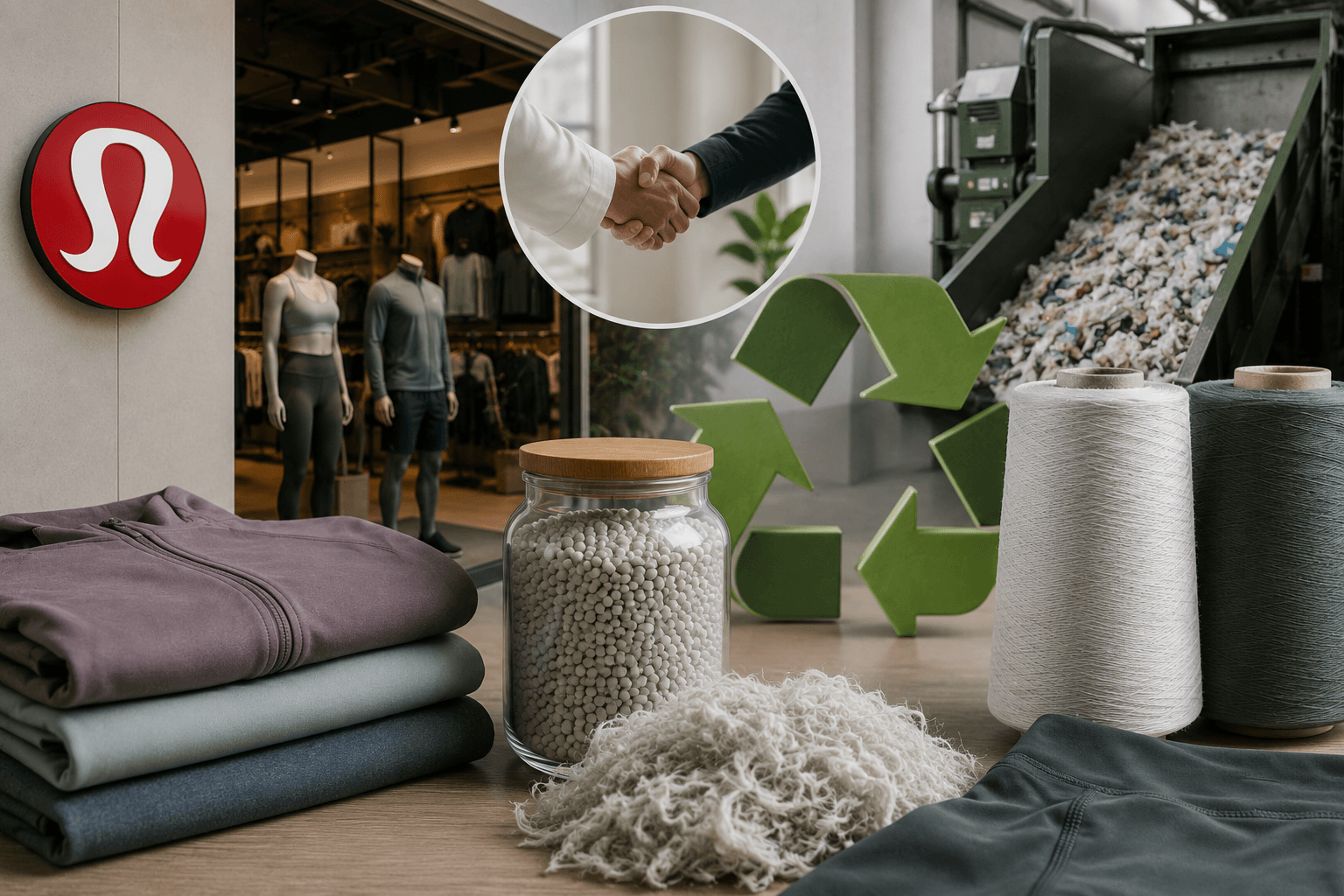
Athletic Apparel Giant Backs Nylon-Recycling Startup In $30 Million Funding Round
A French materials startup has landed a major funding round and a growing list of household-name apparel partners for its approach to breaking down two nylon variants that have long resisted recycling.
A materials-recycling venture out of France has pulled in fresh capital from an unlikely source — one of the world's best-known activewear labels — as fashion brands scramble to solve a stubborn plastic waste problem hiding in plain sight.
A Chemistry Problem Fashion Couldn't Solve
The startup at the center of this deal has built its business around a narrow but stubborn problem: two closely related nylon variants used across activewear and lingerie are nearly indistinguishable once they end up mixed together in discarded clothing. That similarity makes them almost impossible to separate using conventional sorting methods, so most of it has historically been destined for landfill rather than a second life. The company's process is designed to pull both variants apart and recover them without requiring brands to change how they source or blend materials in the first place.
Why Now: Volatility Meets Regulation
Two forces are pushing apparel companies toward circular materials at the same time. On one side, updated European Union waste rules are pressuring manufacturers to build recycled content into their supply chains. On the other, recent turbulence in global oil markets has made petroleum-based nylon pricing unpredictable, with some brands reportedly renegotiating supply contracts as often as every week. That combination has turned a sustainability nice-to-have into something closer to a hedge against volatile input costs, giving recycled nylon a business case that goes beyond brand image.
Founders Shaped By Past Failure
The company's leadership brings an unusual mix of backgrounds. Its CEO came from fashion and secondhand e-commerce before pairing up with a chemistry researcher through a Paris-based startup matchmaking program, later refining their process in a university lab. Their technical lead previously worked at a battery manufacturer that collapsed into bankruptcy, an experience the CEO says shapes how the team approaches risk today — willing to push boundaries as a young company, but wary of spreading itself across too many bets at once. That same discipline is why the business has chosen to stay focused on nylon for now rather than expanding into other recycled materials or industries.
There's no green premium here — a real climate solution only works if it's cost competitive and scalable, and everyone across the industry needs to succeed together for any single company to succeed.
Public Money, Private Ambitions
The round was led by a green-technology fund tied to France's public investment bank, part of a broader national push to build up domestic industrial capacity while cutting dependence on fossil-fuel-based materials. The company has also received grant and equity backing from a European innovation-focused public body. Alongside that public support sit a handful of private venture and impact-focused investors, underscoring that the business is expected to deliver commercial returns, not just environmental ones. Competition in the space includes both enzyme-based plastic-eating startups and at least one major chemical conglomerate that has already brought its own recycled nylon to market — rivals the founders describe as necessary allies rather than threats, given the sheer scale of the waste problem.
- A hard-to-solve material problem attracted serious capital. Two nylon types that are nearly impossible to sort apart now have a dedicated recycling process built around them.
- Cost volatility is a bigger driver than optics. Unpredictable oil-linked pricing is pushing brands toward recycled alternatives as much as sustainability branding is.
- Supply-chain players are becoming investors. A garment manufacturer joining the funding round signals how seriously industrial partners are taking textile waste.
- The business deliberately stays narrow. By producing only raw pellets — not finished yarn or fabric — the company avoids competing with the manufacturers it's trying to supply.
- Public and private capital are working in tandem. National green-tech funding sits alongside venture investors who expect the business to scale into a profitable, competitive operation.