
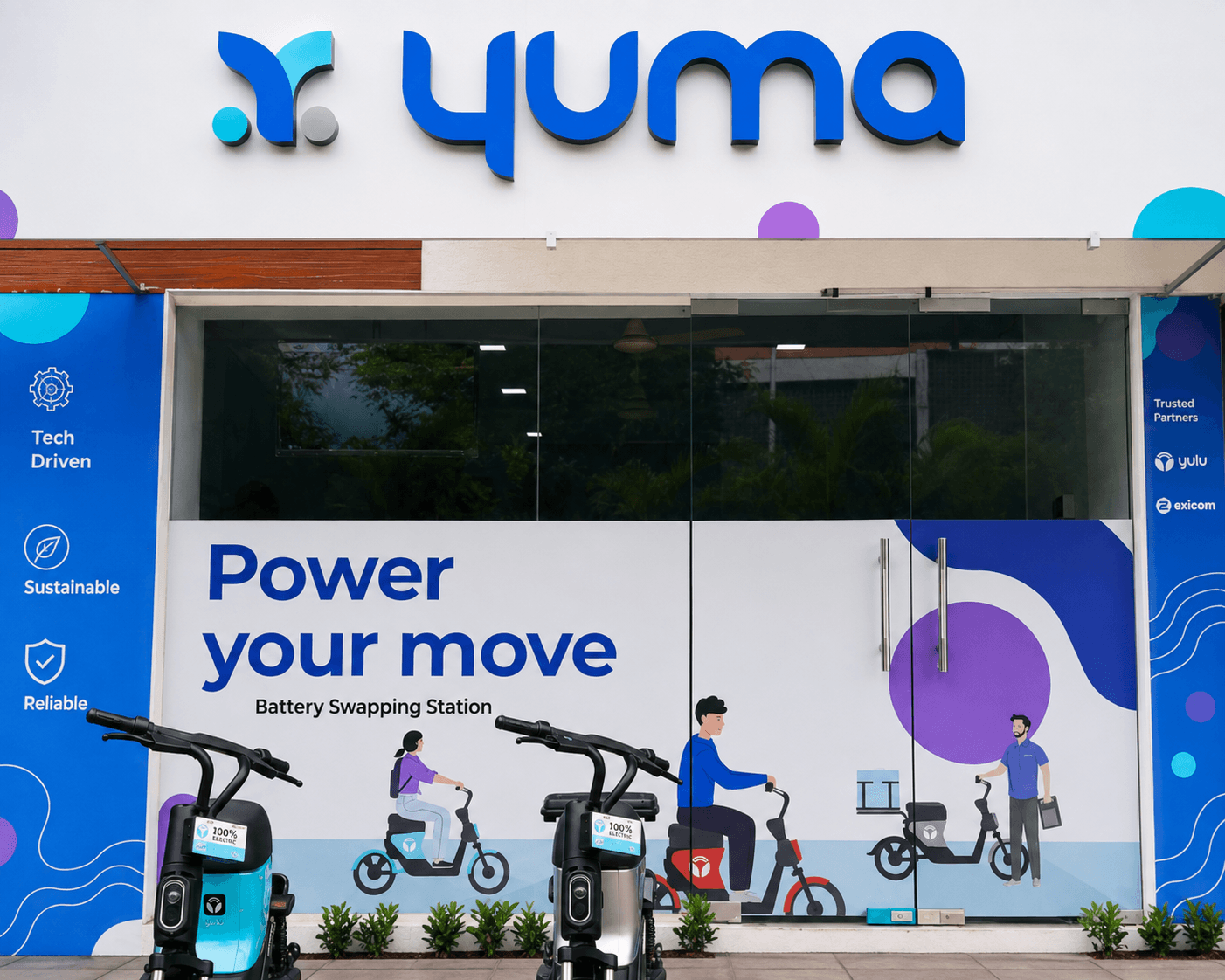
Canadian Auto Giant Doubles Down on India's Battery-Swap Boom
A major global auto parts supplier is pouring another $35 million into an Indian battery-swapping network built for two- and three-wheelers, betting that the country's booming delivery economy can make a model that has flopped elsewhere finally work at scale.
Battery swapping hasn't caught on in most of the world, but a Canadian auto-parts giant thinks India's crowded two- and three-wheeler market, fueled by a fast-expanding gig economy, could be the exception that finally proves the model out.
A Bigger Stake in a Capital-Hungry Bet
The Bengaluru-based swapping operator, which spun out of a homegrown mobility startup a few years ago, has now taken in a fresh injection of capital that raises the auto supplier's ownership above the roughly half-share it held when the joint venture first launched. The mobility startup's original stake will be diluted as a result, though the exact new split hasn't been made public.
This latest round builds on a relationship that began with a combined commitment of roughly $77 million split between the ride-hailing platform and the swapping arm. With this new round, cumulative backing for the swapping business alone has climbed well past its original size, underscoring how capital-intensive it is to build out physical battery infrastructure across a country as large and varied as India.
Why India's Gig Economy Is the Real Bet
The thesis leans heavily on India's expanding base of delivery riders. Company leadership estimates that only a small slice, somewhere around one in ten gig-economy vehicles, currently runs on electric power, leaving enormous headroom if more riders switch away from gasoline. For workers who spend long hours on the road every day, minimizing downtime is the whole game, and that's where swapping is pitched as having an edge over plugging in.
Exchanging a depleted battery for a charged one reportedly takes under two minutes, compared with a fast charge that can sideline a rider for twenty to thirty minutes and demands far more space and power capacity to serve several vehicles simultaneously. That time advantage is the core pitch to fleet operators and independent riders alike.
Battery swapping has failed to gain traction in most markets, but India's density of two-wheelers and its always-on gig workforce may be the one combination that finally makes the unit economics work.
Building Ahead of Demand
The business isn't profitable overall yet, even though some of its longer-running stations are already generating positive earnings before interest, taxes, depreciation, and amortization. Leadership is targeting a break-even point on that metric within the next couple of quarters. Getting there requires expanding infrastructure well ahead of rider demand, which the fresh capital is earmarked to fund, including a plan to roughly double the battery fleet over the next year to eighteen months.
The ride-hailing platform that birthed the venture still drives the overwhelming majority of its swap volume, though that reliance is easing as other fleets begin contributing a growing share. Management expects outside customers to account for roughly a quarter of total swaps within two years. With its largest partner having recently closed a sizable funding round of its own to grow its electric two-wheeler fleet, the swapping network will need to scale in step to keep up. Expansion into two additional major Indian cities is planned in the coming quarters, alongside deeper coverage in existing markets.
- Stake increased, not just capital added. The new $35 million pushes the auto supplier's ownership above its original majority position, diluting its Indian partner further.
- India's gig economy is the growth engine. With only a small fraction of delivery vehicles currently electric, there's a large pool of potential riders to convert.
- Speed is the core value proposition. Sub-two-minute swaps are positioned as a meaningful edge over fast charging for time-strapped riders.
- Scale requires heavy upfront spending. Profitability remains elusive company-wide even as individual stations turn a profit, reflecting the capital intensity of physical infrastructure.
- International expansion is on the horizon. Southeast Asia and parts of Africa are being eyed as future markets once the India playbook matures.