
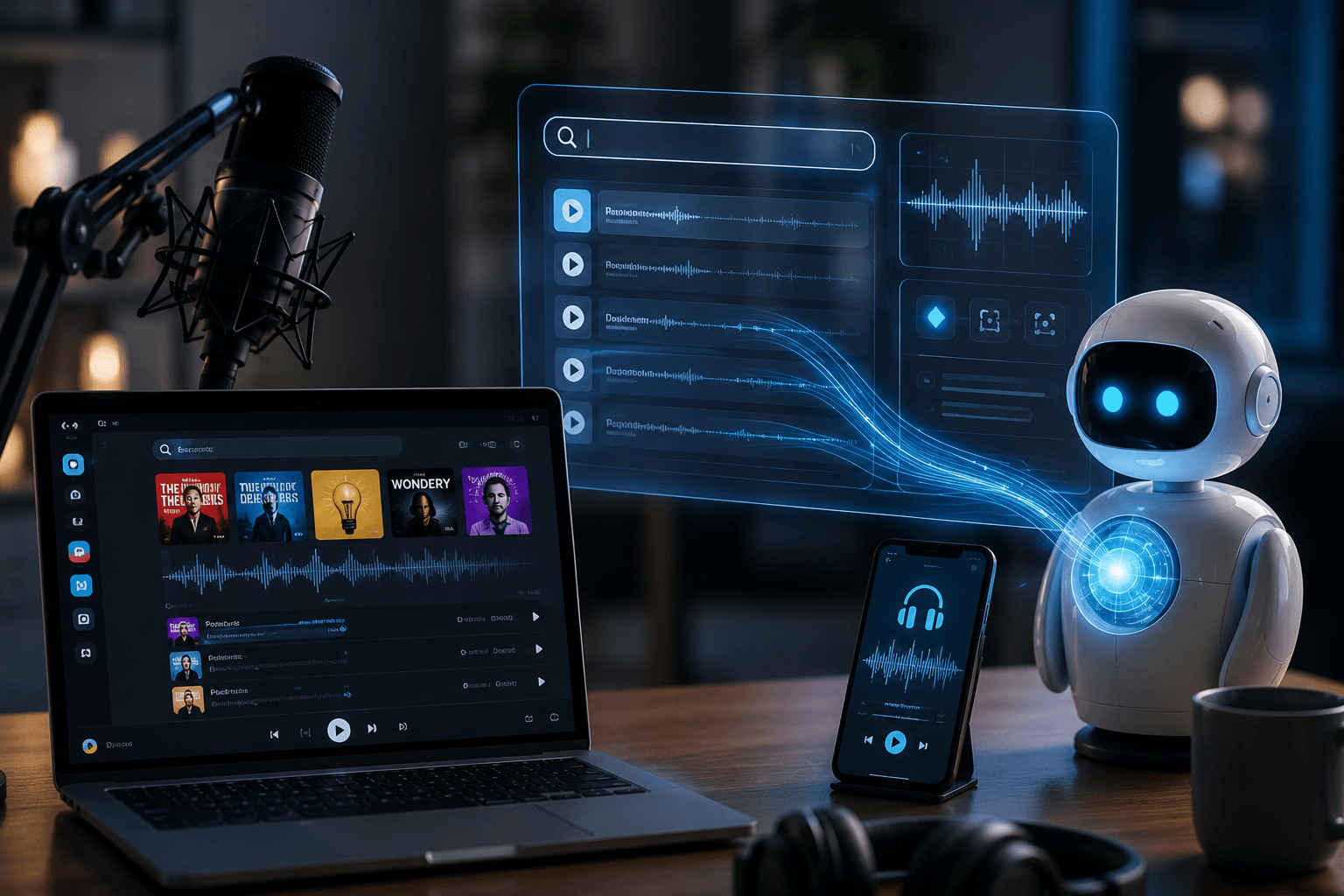
News Reader Startup Pivots to Turning Spoken Podcasts Into Data AI Agents Can Use
A team best known for building an AI-powered news app has shifted gears toward a bigger opportunity: transcribing and indexing hundreds of thousands of podcasts so both humans and AI agents can search, track, and act on what's said in them.
Spoken audio has long been one of the biggest blind spots for AI systems that otherwise crawl and understand nearly everything published in text. A startup best known for a different product entirely is now betting that closing that gap in podcasting could be more valuable than the app that got it there.
From Feature to Standalone Product
The idea grew out of a feature inside the company's original AI news-reading app, which used an internal system to surface interesting podcast clips alongside related news stories in its feed. That feature turned out to be one of the app's most popular additions, but the team eventually realized the underlying technology was worth far more outside the confines of a single reading app.
As interest in autonomous AI agents accelerated, the company decided to pivot its focus almost entirely toward building an API around that podcast-intelligence layer, rather than continuing to treat it as a supporting feature for its news product.
Giving AI Agents "Ears"
The pitch centers on a simple but overlooked limitation: most AI agents and web-crawling services are built to understand text, leaving them effectively deaf to anything that only exists as spoken audio unless someone transcribes it first. By transcribing and structuring podcast conversations at scale, the platform aims to become the missing audio layer that lets agents search, cite, and act on what's actually being said in podcasts — not just written descriptions of them.
Every transcription comes with speaker labels and rich contextual tagging, identifying the people, companies, brands, products, and topics being discussed. The system can then track how often specific entities come up across shows and push alerts through email, Slack, or webhook whenever a chosen guest, company, or topic is mentioned — filterable down to particular shows or top-ranked podcasts only.
Text has been searchable for decades, but spoken conversation has stayed locked away — turning that audio into structured, agent-readable data is where the real opportunity sits.
Who's Actually Paying
Beyond journalists and researchers, some of the platform's top-paying customers include AI-powered search products and data resellers looking to plug audio intelligence into their own tools. A well-known AI search API provider is already listed among its integration partners, underscoring how much of the demand is coming from other businesses building agent-facing products rather than individual consumers browsing a website.
Additional monetizable layers include political bias analysis, chart-ranking data, audience size estimation, sponsorship details, and brand-suitability scoring — all metadata that becomes far more valuable once podcasts are fully searchable rather than locked inside raw audio files.
- Audio is AI's blind spot. Most agents and crawlers only understand text, leaving spoken podcast content invisible unless it's transcribed and structured first.
- Scale is the moat. Transcribing more than 130,000 shows, including every Apple Top 200 podcast, positions the platform as the largest service of its kind.
- Institutions are the early buyers. Investment firms are currently the platform's highest-volume API customers, ahead of journalists and researchers.
- Monetization goes beyond search. Ad tracking, sponsorship data, and brand-suitability scoring open additional revenue paths on top of the core transcription product.
- The pivot signals where value is shifting. A feature born inside a consumer news app became valuable enough to justify becoming the company's primary focus.