
How Two E-Scooter Veterans Built an AI Agent to Fix Broken Customer Support
After watching support tickets spiral into an unmanageable mess at a shared-mobility company, two operators built an autonomous agent designed to reason through complex, multilingual service requests instead of just deflecting simple ones.
Long before they wrote a line of code for an AI agent, Harry Yu and Zachary Wang were living the problem they'd eventually try to solve — watching a fast-growing e-scooter operator's support desk turn into a tangle of inconsistent tags, patchwork fixes, and rising ticket volumes with no systematic way to keep up.
From Scooters to Software
Before starting their current venture, Level3AI, Yu and Wang spent years scaling Neuron Mobility, a shared e-scooter platform operating across multiple markets. Running support at that scale exposed them to a familiar but under-solved problem: as customer volume grows, support quality becomes harder to hold steady, and the tools built to manage that growth tend to buckle under their own complexity.
That firsthand experience shaped their read on the industry. Rather than chasing the fastest possible rollout of a new tool, they concluded that most automation vendors had skipped a harder, less glamorous question: how do you keep a support system governable as it scales, instead of just fast to deploy?
Why Support Breaks Down at Scale
The founders point to a structural tension at the heart of enterprise customer service. Human-staffed support teams are inherently inconsistent — quality shifts by agent, shift, and workload, and the standard fix of hiring more people simply expands a cost center rather than solving the underlying issue.
Meanwhile, the automation tools already on the market are typically built for repetition, not reasoning. They can competently deflect simple, high-frequency questions, but stumble the moment a request requires tracing through account history, operational context, or multiple linked systems. In markets across Asia, where support has to function across many languages simultaneously, that gap creates outsized friction for enterprises trying to serve diverse customer bases reliably.
Introducing EMILY
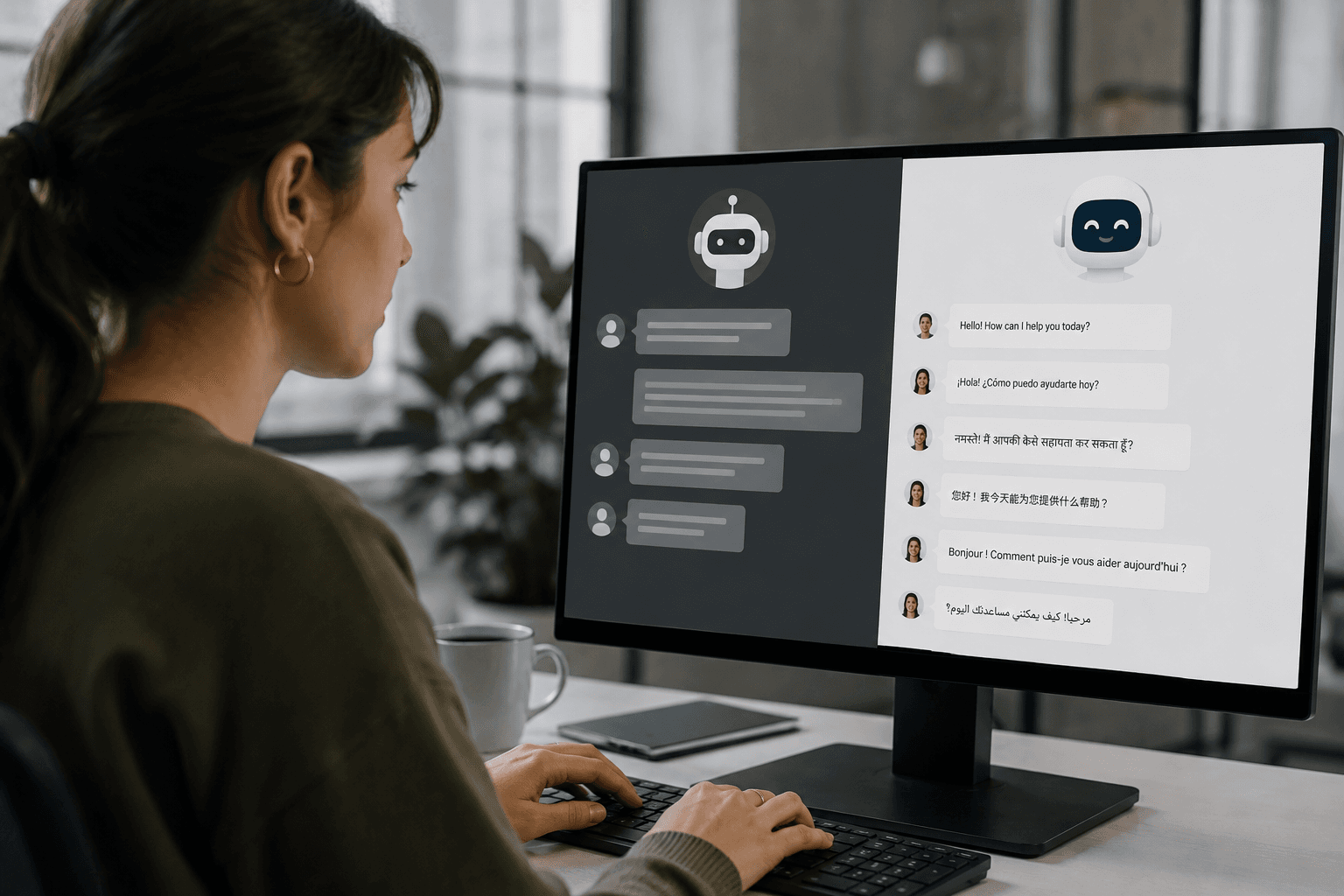
Level3AI's answer is EMILY, an AI agent built to independently work through multilingual enterprise support cases rather than simply route them. Instead of treating each request as an isolated ticket, EMILY is designed to reconstruct the operational logic and root cause behind a customer's issue — pulling in account history and prior interactions to handle multi-step tasks such as account lookups from start to finish.
The system is also built for concurrency. By coordinating directly across the stakeholders and backend systems a request touches, EMILY aims to cut out the queuing and wait times that typically pile up when support scales, processing large volumes of interactions in parallel rather than one at a time.
Crucially, the founders designed the agent with defined limits. EMILY operates within set decision boundaries and is built to hand a case over to a human team member proactively, before a customer's experience starts to suffer — treating escalation as a safeguard built into the system rather than a fallback after something has already gone wrong.
The real failure point in enterprise support isn't a lack of automation — it's automation that was never built to stay governable as ticket volume and complexity grow.
- Operational scars shaped the product. The founders built EMILY after living through the support challenges of scaling a high-volume mobility platform themselves.
- Cost-center thinking is the core problem. Treating headcount as the default answer to rising ticket volume doesn't fix inconsistent quality — it just makes inconsistency more expensive.
- Reasoning is the real gap in existing tools. Most automation on the market handles repetitive queries well but breaks down on multi-step, context-heavy requests.
- Concurrency matters as much as accuracy. EMILY is built to coordinate across systems and handle large volumes of interactions in parallel, not just answer one query correctly.
- Guardrails are a feature, not an afterthought. Defined decision boundaries and proactive human escalation are built into the system from the start.