
Inside the Push to Build an Operating System Where AI Agents Replace Apps
A mobile OS developer is betting that the next leap in computing isn't a smarter app — it's an operating system that skips apps altogether and lets AI agents handle the work directly.
AI features have spent the past few years living inside individual apps as add-ons. One mobile technology company is betting the next shift will be far more fundamental: baking AI directly into the operating system itself.
Building AI Into the Foundation, Not the Feature List
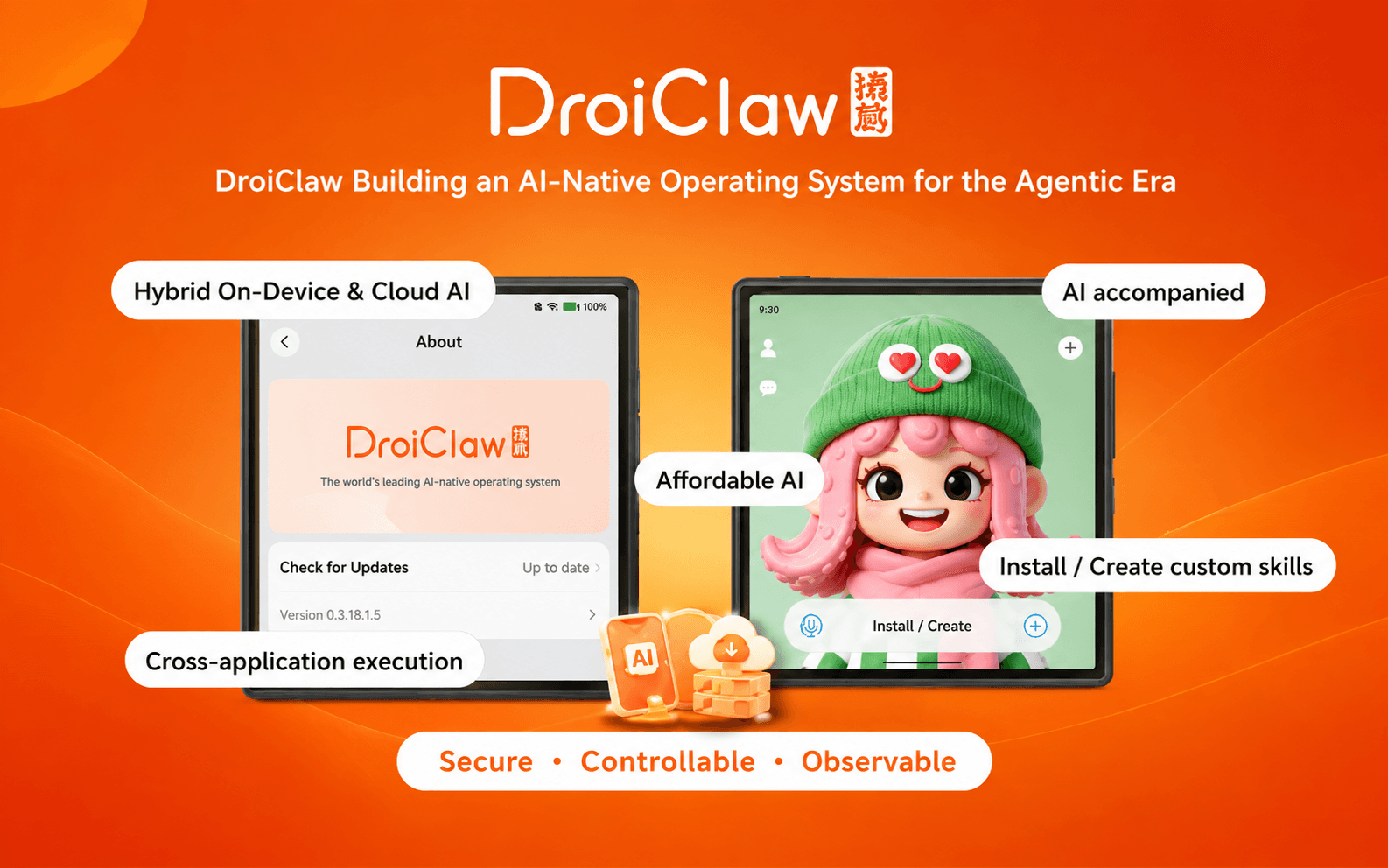
Most phones today bolt AI onto a familiar app-based structure: a writing assistant here, an image editor there. A Shanghai-based operating system developer is taking a different approach with its new agentic platform, weaving AI directly into system scheduling, user interaction, task execution, and resource management, rather than treating it as a bundle of standalone features. The goal is a phone that understands what someone wants to accomplish, not just which app they want to open.
An Operating System Without Apps
The platform's larger ambition is to move past the app-centric model altogether. Instead of tapping through multiple apps to book travel or summarize a document, AI agents are designed to interpret natural-language requests, map out the steps required, coordinate the right system functions and services, and then carry out approved actions automatically. Routine tasks become more hands-off, while sensitive operations still require explicit user authorization — a nod to keeping people in control even as agents take on more of the legwork.
The real test for any agentic operating system won't be how impressive the demo looks — it'll be whether people trust it enough to hand over the routine tasks they used to do themselves.
Betting on an Open, Affordable Ecosystem
Rather than locking the platform to a single device maker or AI provider, the company designed it to support multiple hardware partners, developers, and AI model providers, including customized and privately deployed options. Users can personalize AI avatars, install and build custom skills, and configure scheduled tasks, giving the system room to evolve alongside a person's needs. The approach draws on more than a decade of prior operating-system work from the same company, whose earlier platform reportedly reached over 200 million devices worldwide through a network of over 1,000 hardware and software partners spanning Europe, India, Southeast Asia, and Latin America.
- AI moves from feature to foundation. Instead of sitting inside individual apps, AI is built directly into system scheduling and task execution.
- The long-term goal is an app-free experience. Agents are designed to understand requests and coordinate actions across the system without manual app-hopping.
- A hybrid architecture balances power and reliability. Cloud models handle advanced tasks while an on-device fallback keeps basic functions running offline.
- Control stays with the user. Sensitive actions require authorization, backed by permission management and layered data protections.
- Affordability is part of the pitch. Launch devices start around $160, aiming to put agentic AI within reach beyond premium phones.