
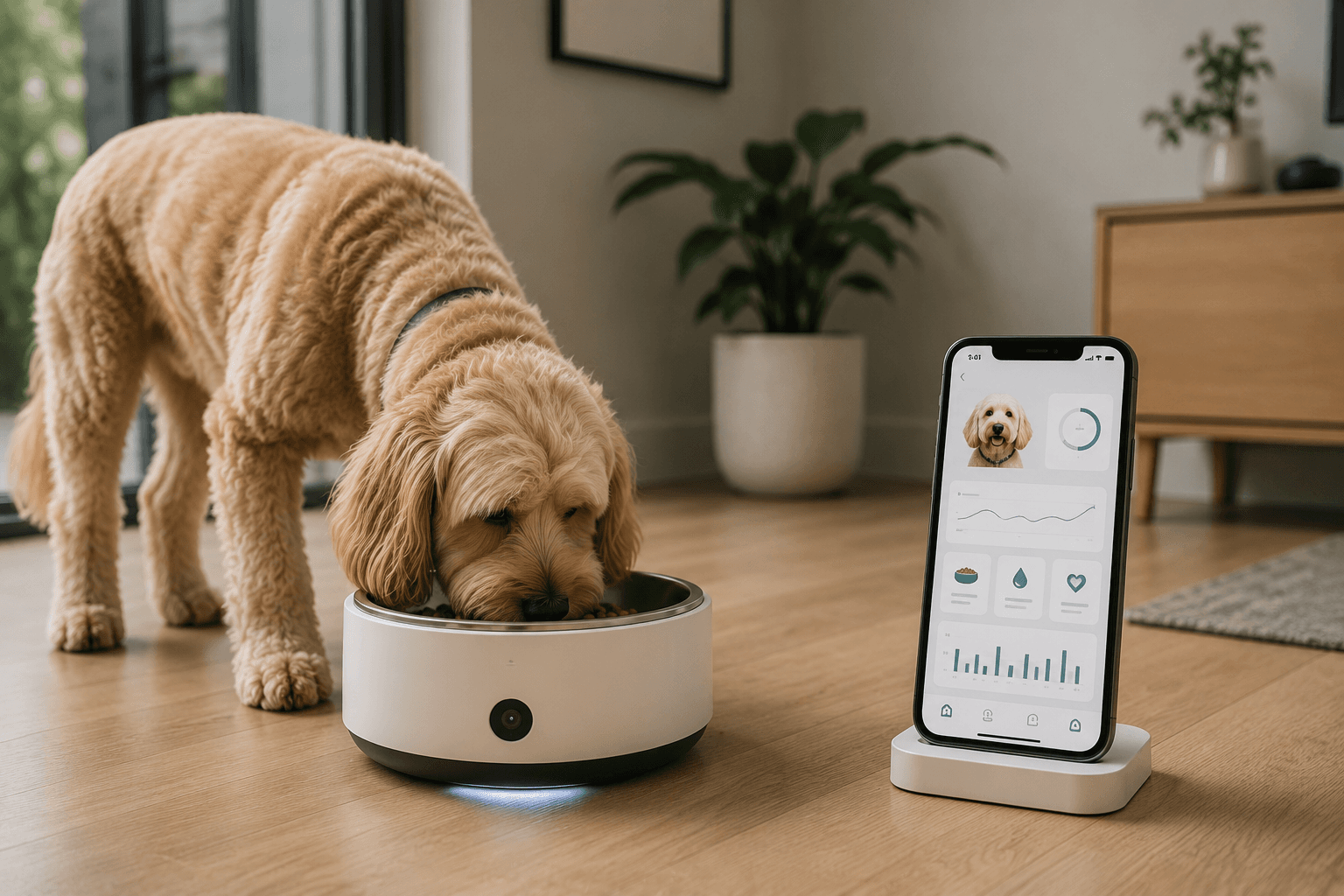
This Startup's AI-Powered Dog Bowl Wants to Catch Illness Before You Do
A Palo Alto startup has built a sensor-loaded feeding station that tracks how dogs eat and drink, then uses AI to flag subtle changes that could signal an underlying health problem long before symptoms become obvious.
Dogs are famously good at hiding pain and illness until a problem has already progressed — and a new startup wants to give owners an early-warning system built right into the food bowl.
A Smart Bowl That Watches How Dogs Eat
The company has built a sensor-equipped feeding station that tracks how much food and water a dog consumes, how quickly they eat, and even picks up on chewing and swallowing sounds, facial temperature patterns, and mouth movements. All of that information feeds into an AI system that builds a personalized baseline for each dog.
Once that baseline is established, the platform watches for meaningful, sustained shifts away from it and surfaces those changes to owners through an app and periodic reports — information the company says can also give veterinarians a more detailed picture if an appointment becomes necessary. Owners can also manually log extra details so the baseline reflects things the sensors alone can't capture.
Why the Feeding Bowl Is the Right Vantage Point
The company's co-founder and CEO has explained that the feeding bowl offers a uniquely consistent window into a dog's daily routine, since it's used in the same spot, in the same posture, twice a day, for years on end. According to the founder, appetite, hydration, and comfort while eating are often among the very first things affected by pain, dental issues, digestive trouble, hormonal changes, or illness — well before more visible symptoms like limping or lethargy show up, which dogs tend to be much better at masking.
Early Signals, With Some Caveats
During the pilot, the system reportedly picked up on an eating-pattern shift that was later traced to a chipped, infected tooth in one dog. In another instance, a sustained change in eating habits and body temperature prompted an owner to seek veterinary care, which led to a tick-borne illness diagnosis.
Still, the sample size behind those results is small, and only a modest number of devices have shipped so far. The company has also acknowledged it doesn't yet have independently verified sensitivity, specificity, or false-positive rates for the alerts it generates — that kind of validation would require a formal study comparing its alerts against confirmed diagnoses. The team is careful to frame the product as a tool to help owners and vets catch potential issues sooner, not as a substitute for a professional diagnosis.
A pet's daily feeding routine turns out to be one of the most consistent, information-rich windows into their wellbeing — and that consistency is exactly what makes early detection possible.
What's Next
Looking ahead, the company plans to expand its hardware lineup with a wearable device to track movement and rest, plus a hub capable of pulling in data from third-party smart collars, feeders, and other connected home devices. The longer-term vision is to become a broader animal health data company, using the information it collects to support research and work with nutrition and insurance providers — and potentially extending the same approach beyond dogs to cats, horses, or livestock. The company has raised pre-seed funding to date and is now in early conversations for a seed round.
- The bowl is the sensor. A connected feeding station tracks eating speed, sounds, and facial thermals to build a personalized health baseline for each dog.
- Consistency is the advantage. Because feeding happens in the same spot and posture daily, it offers unusually clean data for spotting subtle changes.
- Early results are promising but small. Only around 50 devices have shipped, and formal clinical validation of alert accuracy is still ahead.
- Not a vet replacement. The platform is explicitly positioned as a way to flag potential issues sooner, not to diagnose them.
- Bigger ambitions beyond the bowl. Plans include a wearable, a hub for third-party devices, and eventually expanding the data platform to other animals.